Physicists achieve helicon current drive for the first time, a fusion technique abandoned in the 1980s
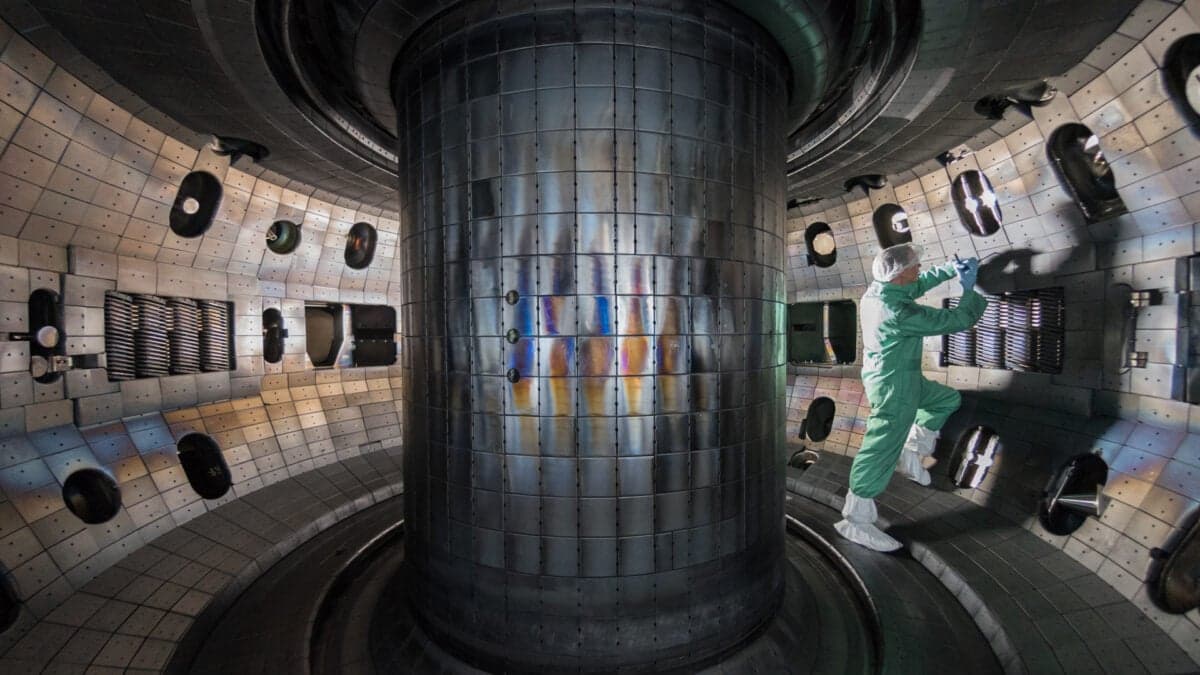
Researchers at General Atomics reported the first experimental demonstration of helicon current drive at the DIII-D National Fusion Facility. The technique, proposed in the 1980s, uses high-frequency radio waves to generate an internal electric current that stabilizes the plasma. It failed at the time because plasmas were not reactor-like enough, wave-launching equipment was inefficient and diagnostics were limited. The results were published in Physical Review Letters.
In 35 seconds
- Helicon current drive was proposed in the 1980s, but the equipment of the time could not validate the theory.
- At DIII-D a "comb-line" antenna was used to launch helicon waves into plasmas hot enough to absorb them.
- The goal is to drive current non-inductively so tokamaks can operate in steady state.
Read the full story at Gizmodo
IASummary generated by artificial intelligence from a story by Gizmodo. It may contain errors: the original source prevails.


Comments
Be respectful. Comments reported by several people are hidden until a moderator reviews them.
You do not need an account to read, only to comment. Sign in with a code sent to your email or with your Google account. We only show the name you choose, never your email.